
There’s no single best set of 4×4 wheels. The right ones fit your vehicle’s hubs and brakes, carry the weight you actually load onto them, stay within Western Australia’s rules for modified vehicles, and suit the roads and tracks you drive. Most arguments about steel versus alloy, or 17-inch versus 18-inch, come back to those four things.
This guide covers what to check when you’re choosing 4×4 wheels in Perth, and what the official rules say about size, offset, load rating and wheel spacers.
The rules come from the WA Department of Transport and the national modification code it points to, Vehicle Standards Bulletin 14 (VSB 14).
VSB 14 sets the national technical requirements, while the Department of Transport runs WA’s approval and inspection process. Where a limit depends on how your vehicle is categorised, the guide says so instead of guessing.
Steel or Alloy: Which Suits a 4×4?
Both work. Trouble starts when the choice is made on looks, or on a rule of thumb that doesn’t match how the vehicle is used.
When you compare wheels and alloys, start with the rating and standard the wheel is made to, not the finish.
|
Steel wheels |
Alloy wheels |
|
|
Rust and corrosion |
Rusts where the paint or coating is chipped, so touch up chips and rinse off salt after beach driving |
Doesn’t rust like steel, but the finish can still corrode where it’s damaged |
|
After a hard knock |
Generally easier to straighten enough to keep driving |
Generally more likely to crack than bend, and a cracked alloy usually means a new wheel |
|
Standards |
Same fitment rules as any wheel (covered below) |
VSB 14 says aluminium alloy rims must comply with WIA, SAA, TÜV or JIS standards, so ask which one the wheel is made to |
Weight varies from wheel to wheel, so compare the stated figure for the exact wheels you’re considering rather than assuming alloy will be lighter.
For a vehicle that mostly lives on sealed roads around Perth, with the odd beach or gravel weekend, either type is fine, and the decision comes down to fitment, load rating and budget.
For a vehicle that heads remote regularly, the better question is what you’d do if a wheel were damaged a long way from the nearest town, and what spare you’re carrying.
Wheel Size and Tyre Profile
VSB 14 treats a wheel as the tyre and rim together, and that’s a useful way to look at it. Go up a rim size and, if you want to keep the same overall diameter, the tyre sidewall gets shorter.
The legal limit is on overall tyre diameter, not rim size. For off-road passenger vehicles and goods vehicles, VSB 14 allows a tyre no more than 50 mm larger or 26 mm smaller in overall diameter than the manufacturer’s designated tyre, and the speedometer has to stay within the accuracy limits in ADR 18. Passenger cars get a tighter allowance: no more than 15 mm larger or 26 mm smaller.
Width has its own limits. For passenger cars and their derivatives, the Department of Transport says a tyre must not be more than 30% wider than the widest optional tyre the manufacturer lists, and the rim width must not exceed the recommendation for that tyre.
For off-road passenger and goods vehicles, VSB 14 allows tyres up to 50% wider than the widest optional tyre, but its Table LS3 also sets maximum tyre and rim widths, so check the table as well as the percentage.
Your tyre placard is the place to start. The Department of Transport says every passenger car made after 1972 has one, listing the original and optional tyres and rims for that model.
A change of tyre size and aspect ratio is on the Department of Transport’s list of minor modifications that don’t need approval, as long as the vehicle still complies with the regulations.
VSB 14 adds that a tyre and rim swap within its limits needs no certification, provided the total height change from all modifications stays within 50 mm. If you’re also fitting a lift, the two add together.
A spring-only lift within 50 mm of the manufacturer’s figure falls under the Department’s “simple” category, which means an inspection at an Authorised Inspection Station and a modification permit.
Which limits apply depends on how your vehicle is categorised: passenger car (MA), off-road passenger vehicle (MC) or light goods vehicle (NA), for example.
The category is shown on the compliance plate, and VSB 14 doesn’t treat AWD “soft roaders” as off-road vehicles for these limits. Confirm with the Department of Transport or an Authorised Inspection Station before you buy, rather than assuming.
Offset, Track Width and Clearance
Offset, often shown as ET, describes where the wheel’s mounting face sits relative to the centre of the rim. Lower offset pushes the wheel further out, and that widens the track, which is the distance between the left and right wheels on an axle.
Offset is the distance between the wheel’s centreline and its mounting face. Lower offset moves the wheel outwards. Example figures only.
VSB 14 limits how far you can go. For off-road passenger vehicles and goods vehicles, track can increase by no more than 50 mm beyond the manufacturer’s maximum. VSB 14 says that allowance does not apply to AWD and 4WD passenger vehicles certified in the MA category, so check which category yours is in.
For passenger cars, the limit is 25 mm, which VSB 14 says works out to a change in offset of no more than 12.5 mm. By the same arithmetic, 50 mm of track is about 25 mm of offset on each wheel.
The wheel also has to physically fit. VSB 14 says no part of the wheel may touch the body, chassis, steering, brakes or suspension in any operating condition. It describes testing with the vehicle fully laden, on full steering lock, and clearing speed humps and driveway entries.
The wheel must sit within the bodywork or mudguards, flares included, with the steering straight ahead, and steering or suspension stops can’t be modified just to create clearance.
Wheel spacers are a separate question, and the answer is short: VSB 14 says spacers between the wheel mounting face and the road wheel must not be used unless the vehicle manufacturer fitted them as original equipment.
One more point from the same document: wider rims and tyres usually change the steering scrub radius, which can make steering response less predictable. That’s a good reason not to push offset to the limit just because the limit exists.
Bolt Pattern, Centre Bore and Brakes
These three aren’t matters of taste. Under VSB 14, a replacement wheel must suit the hub: the same stud or bolt pattern (PCD), the same centre location method and the same nut or bolt taper.
An alloy wheel has to locate on the same diameter of centre spigot, with adaptor rings allowed where the wheel’s bore is larger. Slotted bolt or stud holes aren’t permitted, and nuts or bolts must engage at least one thread diameter unless the manufacturer specifies otherwise.
Brakes follow the same logic. VSB 14 doesn’t allow disc callipers, hubs, suspension or steering parts to be modified to make a wheel fit. If a wheel won’t clear the calliper, the wheel has to change, not the brakes. Ask the supplier whether the wheel has been confirmed to clear the brakes on your exact model and year.
Load Rating, GVM and What You Carry
The legal load rating attaches to the tyre. For light vehicles under 4.5 tonnes GVM that have to comply with ADR 24, VSB 14 says a replacement tyre must have a load rating not less than the lowest one listed on your tyre placard, and the tyres on one axle must share the same construction and size.
If you’ve raised the vehicle’s gross vehicle mass (GVM), the bar goes up. VSB 14 says the tyres must have enough load capacity for the revised GVM, both in total and on each axle.
The Department of Transport adds that any increase to a vehicle’s GVM requires a vehicle inspection, and that a vehicle modified to allow the increase must be weighed, with a weighbridge certificate given to the examiner.
The rim has to cope with the load too, so ask the supplier for the wheel’s own rated load and compare it with your loaded axle weights, not just the tyre’s. If you’re not sure what the vehicle weighs when it’s packed for a trip, a weighbridge will tell you.
While you’re checking numbers, the Department of Transport’s minimum tread depth is 1.5 mm in all principal grooves, the wide grooves usually in the centre of the tyre, as its vehicle checks fact sheet puts it.
Shallower secondary grooves aren’t part of that measurement. The Department also tells owners to check tyre pressure and look for damage to the tyre carcass.
What WA Roads and Tracks Ask of a Wheel
Main Roads WA’s driving guide says unsealed roads turn up outside the Perth metropolitan area and regional cities and towns, and that sharp rocks on them can puncture tyres easily. Its advice for unsealed roads is to carry spare tyres, tubes, a tyre repair kit and an air compressor.
The Department of Biodiversity, Conservation and Attractions (DBCA) describes park roads where gravel, sand, mud or rock can be loose, slippery or corrugated, and tyres can spin and lose grip.
On the Gibb River Road, Main Roads says conditions can change rapidly along the 647 km length, and that tyre pressure should suit both the weight you’re carrying and the road surface.
Sand adds its own rules. DBCA’s park information tells drivers to reduce tyre pressure on soft sand and to re-inflate when they return to two-wheel drive roads.
Some sites have no help on the way out: at the Sandy Point campground, 44 km south of Coral Bay, DBCA says there’s no facility to re-inflate tyres on exit. Bring your own compressor.
Off-road wheels aren’t exempt from the legal limits above, but where you drive does bear on the decision. DBCA’s remote travel advice includes carrying spare tyres, parts and recovery gear, and Main Roads recommends a suitable spare tyre, jack and brace.
If your road wheels are an unusual size or style, think about whether your spare matches them. A spare that doesn’t is a compromise a long way from help.
What to Have Ready Before You Buy
Whoever you’re buying from, a few details make a straight fitment answer much easier to give:
- A photo of your tyre placard, and the wheel and tyre sizes currently fitted
- The exact model, year and variant
- Roughly what the vehicle weighs when loaded for a trip, and whether its GVM has been changed
- Any lift, bull bar, canopy or other gear that affects weight or ride height
- Where you actually drive: mostly sealed roads, regular gravel, sand or remote travel
- Whether your spare will match the wheels you’re considering
Related reading on this site: mud terrain tyres in Perth and 4WD wheel and tyre packages. When you’re ready to compare specific 4WD wheels in Perth, the wheels category lists the wheels currently available.
Wheel Styles Shown on Vehicles
Here are a few wheels from our wheels range. The sizes are the ones we list for each wheel, and bolt pattern (PCD) and offset depend on your vehicle, so work through the checklist above first.
1. Ghost Gloss Black Wheel for BYD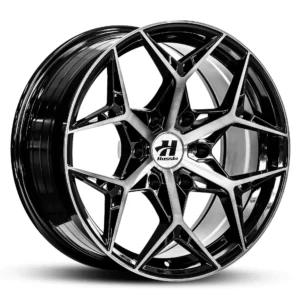
Gloss black with a dark tinted face. It is an 18-inch wheel in 6/139.7 for the BYD Shark 6, with an offset of +15 to +25 for standard guards. More details are on our Ghost Gloss Black Wheel for BYD page.
2. Wolverine Full Gloss Black Wheels
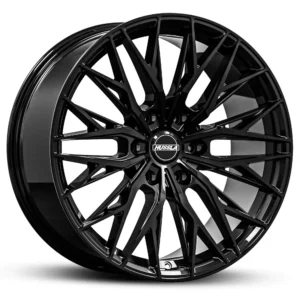
Full gloss black with a tint face. It is a 17×9 for full-size 4WDs, with the Toyota Tundra as the main fitment. Fitment notes are on our Wolverine Full Gloss Black Wheels page.
3. Hussla Ambush Chrome Black Wheel
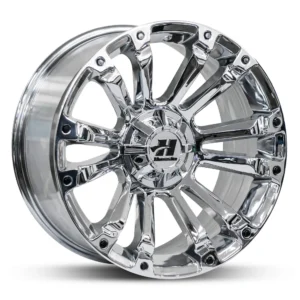
Chrome with black bolts. It is a 17×9 with the Toyota Tundra as the main fitment, and the PCD and offset options depend on the vehicle. Ordering options are on our Hussla Ambush Chrome Black Wheel page.
4. Hussla Snyper Matte Black
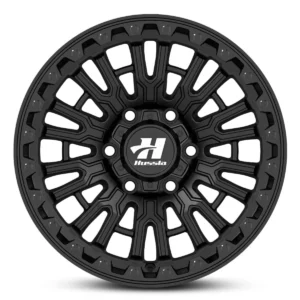
Matte black with black bolts. It is a 16×9 for Toyota utes and 4WDs, including the HiLux, Land Cruiser and Fortuner. Sizing and fitment are on our Hussla Snyper Matte Black page.
5. Hussla Dubai Gloss Silver
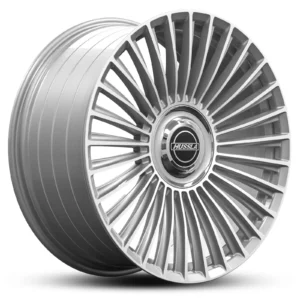
It is a 20×8.5 for Toyota 4WD SUVs and utes such as the Land Cruiser and Fortuner. The rest is on our Hussla Dubai Gloss Silver page.
Whatever the style, send us your make, model, year and suspension setup, and we’ll confirm the PCD and offset before anything is ordered.
FAQ
Are Steel or Alloy Wheels Better for a 4×4?
Neither is better across the board. Steel is generally easier to straighten after a bend, and alloy generally resists rust better, but fitment, load rating and the standard the wheel is made to matter more than the material.
Are Wheel Spacers Legal in WA?
VSB 14, the national modification code the Department of Transport refers to, says wheel spacers must not be used unless the vehicle manufacturer fitted them as original equipment.
Can I Fit Bigger Wheels and Tyres to My 4×4 in WA?
Within limits, yes. The limits cover overall tyre diameter, tyre and rim width, track width, load rating and clearance. A change of tyre size and aspect ratio is on the Department of Transport’s list of modifications that don’t need approval, provided the vehicle still complies. Which limits apply depends on your vehicle’s category, so confirm with the Department or an Authorised Inspection Station.
What Is the Minimum Tyre Tread Depth in WA?
The Department of Transport says tyres need at least 1.5 mm of tread in all principal grooves, the wide grooves usually in the centre of the tyre.
How Do I Find the Right Wheel Size for My Vehicle?
Start with the tyre placard. The Department of Transport says every passenger car made after 1972 has one, listing the original and optional tyres and rims for that model.