
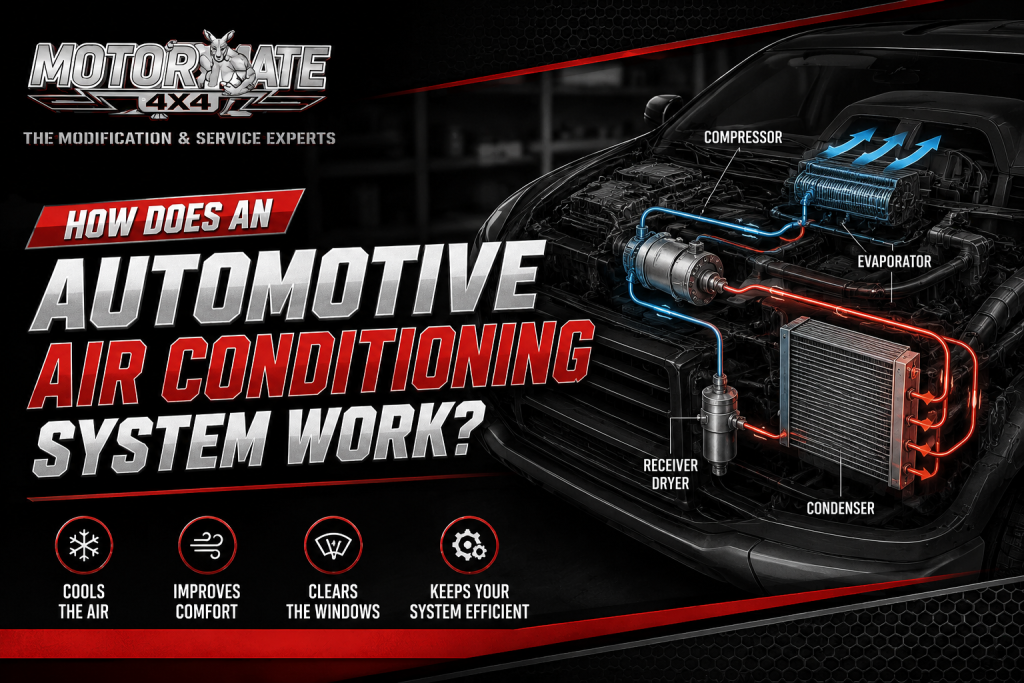
An automotive air conditioning system works by circulating refrigerant through a compressor, condenser, expansion device and evaporator, changing it between gas and liquid to pull heat and humidity out of the cabin and release it outside the vehicle. It’s the same core principle as a household fridge, just built to handle the heat load of a moving car on a 40-degree Perth afternoon.
In this blog, we’ll break down exactly how automotive air conditioning works stage by stage, walk through the automotive AC system components that make up the cycle, and cover the most common reasons cooling performance drops off. By the end, you’ll know enough to spot an early warning sign before it turns into a full repair bill, and when it’s time to get the automotive AC system looked at by a specialist.
How Does Car Air Conditioning Work?
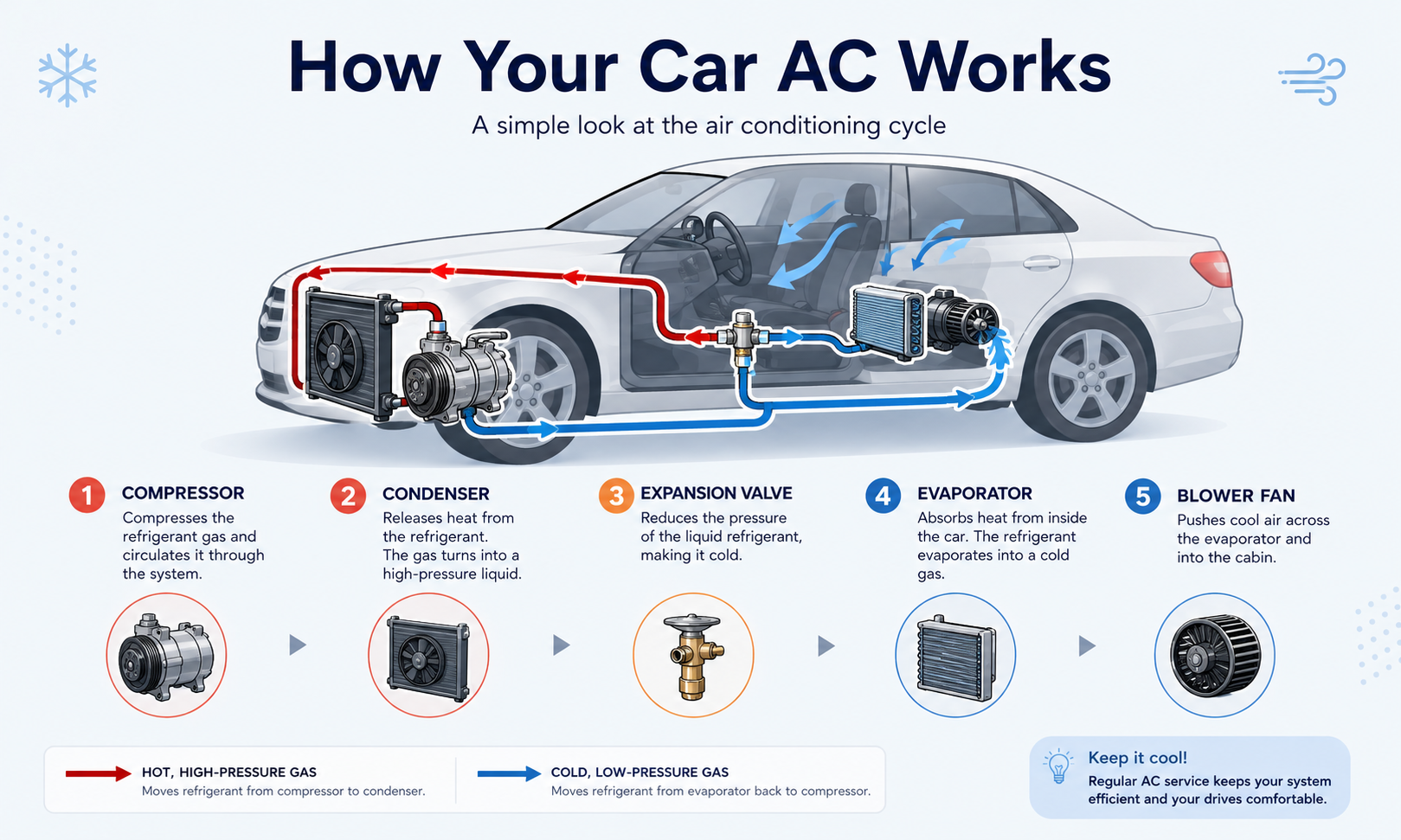
Car air conditioning works by cycling refrigerant through a loop of pressure and temperature changes that pull heat out of the cabin and dump it outside. It’s the same basic principle as a household fridge, just built for the heat load of a moving vehicle.
The refrigerant never disappears. It simply keeps changing between gas and liquid, absorbing heat in one part of the system and releasing it in another, across five main stages.
The Compressor Pressurises the Refrigerant
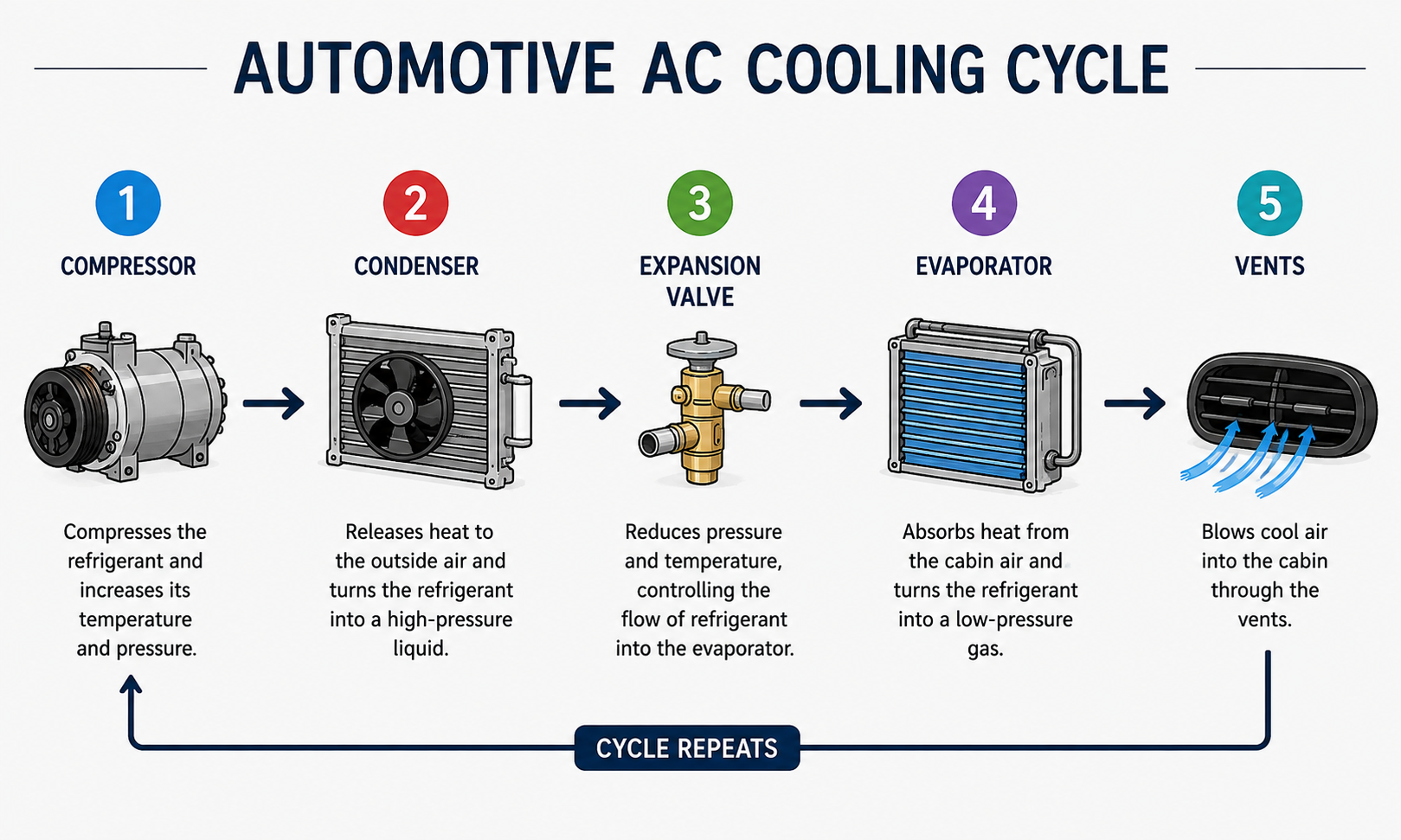
The compressor turns low-pressure refrigerant gas into hot, high-pressure gas. Sitting at the front of the engine and driven by a belt (or an electric motor on some newer vehicles), it’s the heart of the system → without it pumping refrigerant around, nothing else in the loop works.
Refrigerant enters the compressor as a cool, low-pressure gas that’s just finished absorbing heat from the cabin. Squeezing it raises both pressure and temperature, setting it up to release that heat in the next stage.
The Condenser Removes Heat
The condenser releases heat and changes the refrigerant from gas into high-pressure liquid. Mounted right behind the front grille, in front of the radiator, it looks like a mini radiator itself, with thin tubes and fins built to shed heat fast.
As outside air, helped along by the cooling fans, passes over the condenser, the hot gas loses enough heat to condense into a liquid while staying under high pressure. This is why a blocked or dirty condenser is such a common cause of weak cooling. If air can’t move through it, heat has nowhere to go.
The Expansion Device Lowers Pressure
An expansion valve or orifice tube reduces refrigerant pressure and temperature. This small but critical part acts like a controlled bottleneck, forcing high-pressure liquid refrigerant through a tiny opening.
On the other side, the refrigerant expands rapidly and its pressure and temperature drop sharply. That’s the point where it becomes cold enough to start absorbing heat again. Depending on the vehicle, this job falls to either a thermal expansion valve (TXV) or a fixed orifice tube, both achieving the same result slightly differently.
The Evaporator Absorbs Cabin Heat
The evaporator absorbs heat and humidity from cabin air as refrigerant evaporates. Positioned inside the dashboard, this is where the actual cooling you feel happens.
As cold, low-pressure refrigerant flows through the evaporator, warm cabin air is blown across its fins. The refrigerant absorbs that heat and evaporates back into a gas, which also condenses moisture from the air onto the evaporator’s cold surface. That’s why you’ll often see water dripping under a parked car on a hot day. It’s simply condensation draining away, a normal sign the system is dehumidifying properly.
Cool Air Flows Through the Vents
The blower pushes cooled, dehumidified air into the vehicle cabin while the refrigerant returns to the compressor. It forces air across the chilled evaporator and through the ducting, giving you that blast of cold, dry air through the vents.
Meanwhile, the now-warmed, low-pressure refrigerant heads back to the compressor and the whole cycle starts again, repeating continuously for as long as the AC is running.
Alt text: Automotive AC cooling cycle showing the compressor, condenser, expansion valve, evaporator and vents.
Main Components of an Automotive AC System
The main components of an automotive AC system are the compressor, condenser, receiver-drier, expansion device, evaporator and blower fan, all connected by refrigerant lines. Each part plays a distinct role, and a fault in any one of them can throw off the whole cooling process.
- Refrigerant → Transfers heat through the system by changing between liquid and gas. Most Australian vehicles run on R-134a, though newer models are shifting to the more environmentally friendly R-1234yf.
- AC compressor → Circulates and pressurises refrigerant to keep the whole cooling cycle running. Belt-driven on most petrol and diesel vehicles.
- AC condenser → Releases heat from the refrigerant into the outside air, mounted at the front of the vehicle for maximum airflow.
- Receiver-drier → Removes moisture and contaminants that could otherwise damage internal components or cause corrosion. Also acts as a small reservoir for refrigerant.
- Expansion valve or orifice tube → Controls refrigerant flow and creates the pressure drop needed for cooling.
- Evaporator → Absorbs heat from cabin air before the cooled air reaches the vents. Also removes humidity from the air.
- Blower fan → Moves cabin air across the evaporator and through the vehicle’s vents at the speed you select.
Component | Location | Main Job |
Compressor | Front of engine | Pressurises refrigerant |
Condenser | Behind front grille | Releases heat |
Receiver-drier | Near condenser | Removes moisture & debris |
Expansion valve/orifice tube | Near evaporator | Drops pressure & temperature |
Evaporator | Inside dashboard | Absorbs cabin heat |
Blower fan | Inside dashboard | Pushes cool air into cabin |
Most of these parts rarely need attention on their own. It’s usually when one starts to fail, or the refrigerant charge drops, that the rest of the system struggles to keep up.
Why Is My Car AC Not Blowing Cold Air? | 4 Reasons
Your car AC isn’t blowing cold air because of one of a handful of common issues: low refrigerant, a failing compressor, restricted airflow through the condenser, or a fault in a smaller electrical or mechanical component. Working out which one usually comes down to a proper inspection, not guesswork.
Low Refrigerant or a Refrigerant Leak
Low refrigerant can reduce cooling, while leaks need to be properly diagnosed and repaired. Refrigerant doesn’t get “used up” the way fuel does. If levels are low, there’s a leak somewhere, usually at a hose connection, seal, or fitting.
Topping up the gas without fixing the leak is a temporary fix at best, and in Australia it’s tightly regulated too. Refrigerant handling requires a licensed technician under Australian Refrigeration Council rules, so it isn’t a DIY job.
A Faulty AC Compressor
Compressor problems can prevent refrigerant from circulating and the system from cooling correctly. A worn clutch, seized bearings, or internal wear can all stop it from doing its job.
Since the compressor drives the entire cycle, a failing one often means the AC won’t engage at all, or cools poorly and inconsistently, sometimes with a grinding or squealing noise from under the bonnet.
A Blocked Condenser or Restricted Airflow
Dirt, debris, a blocked filter or airflow problems can reduce AC performance. Road grime, leaves, insects and dust build up on the condenser fins over time, especially if you’re covering plenty of gravel roads or dusty tracks around WA.
A restricted cabin air filter has a similar effect from the inside, choking airflow before it reaches the evaporator. Either way, less airflow means less heat transfer, and a noticeably warmer cabin.
Faulty AC Components or Electrical Controls
Problems with expansion devices, fans, sensors or controls can affect cooling and airflow. This is the trickiest category to pin down without proper equipment, since a fault could be a stuck expansion valve, a failed pressure sensor, a dead cooling fan relay, or a wiring issue.
Modern AC systems lean heavily on sensors and electronic controls to manage compressor cycling and fan speed, so an electrical gremlin can easily mimic a mechanical fault. That’s exactly why proper diagnostics beat guesswork here.
How Can You Keep Your Automotive AC Working Properly?
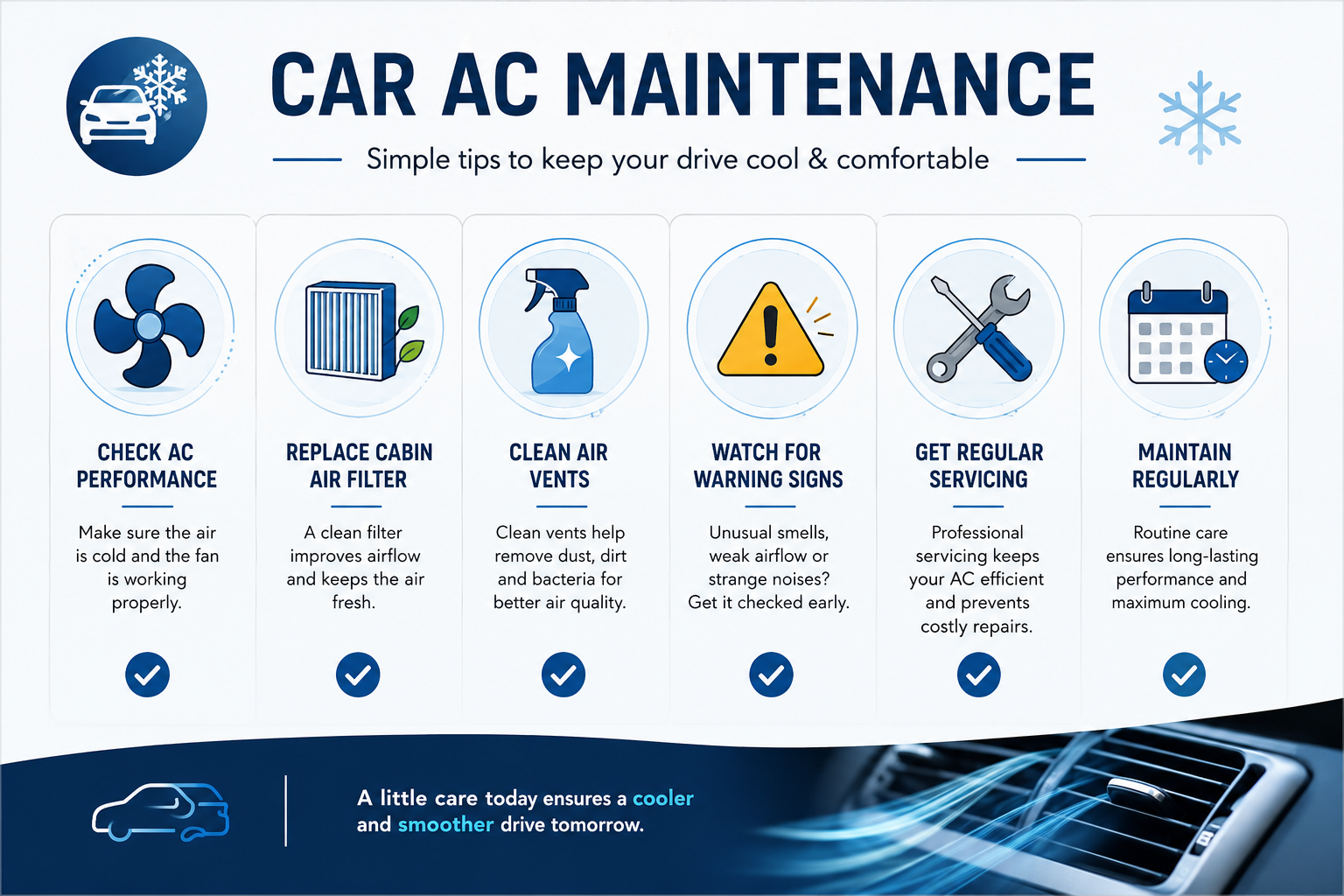
You can keep your automotive AC working properly with a handful of simple habits that cost little and prevent most major failures. AC systems are largely sealed, but that doesn’t make them maintenance-free.
- Run the AC regularly, even in cooler months. This keeps seals lubricated and moving parts from seizing up.
- Keep the cabin air filter clean, replacing it as part of routine servicing to protect airflow and system efficiency.
- Keep the condenser area free from excessive dirt and debris, particularly if you do a lot of off-road or gravel driving.
- Pay attention to weak airflow, unusual noises or reduced cooling. Small changes are often the first sign of a developing fault.
- Have refrigerant leaks and AC faults professionally diagnosed rather than relying on a quick regas alone.
- Follow the vehicle manufacturer’s recommended servicing schedule, which usually includes AC system checks.
A system losing performance gradually is almost always cheaper to fix than one ignored until it fails completely.
Get Your Automotive AC Checked by Motor Mate 4X4
At Motor Mate 4X4, we see firsthand how quickly a small AC issue turns into a hot, frustrating drive if it’s left unchecked.
If your car’s AC is blowing warm air, struggling with weak airflow, making strange noises, or just isn’t performing like it used to, it’s worth getting it looked at before the next heatwave hits. Our team can properly diagnose the cause, whether it’s a refrigerant leak, a worn component, or something else in the cooling system that needs attention, and sort it out the right way the first time.
Get in touch with Motor Mate 4X4 today
FAQs
Why does my car AC smell bad when I turn it on?
A bad AC smell usually comes from mould, bacteria or moisture around the evaporator, cabin filter or drain system. Cleaning and proper servicing can remove the source.
How often should you regas a car air conditioning system?
A car AC should not need routine regassing on a fixed schedule. If refrigerant is low, have the system checked for leaks before regassing.
Does running the car AC use more fuel?
Yes. Conventional car AC adds load to the engine, which can increase fuel consumption. The actual effect varies with the vehicle, weather and driving conditions.
Is it safe to drive with a faulty car air conditioning system?
Usually, yes, if the fault only affects cooling. However, leaks, electrical faults or unusual noises should be checked promptly to prevent further damage.
Why does it take a while for car AC to blow cold air?
Slight delays are normal while the AC system removes heat from the cabin. Persistent slow cooling may indicate low refrigerant, restricted airflow or another fault.