
What Does a Bull Bar Do? More Than Just Protection for Your 4WD
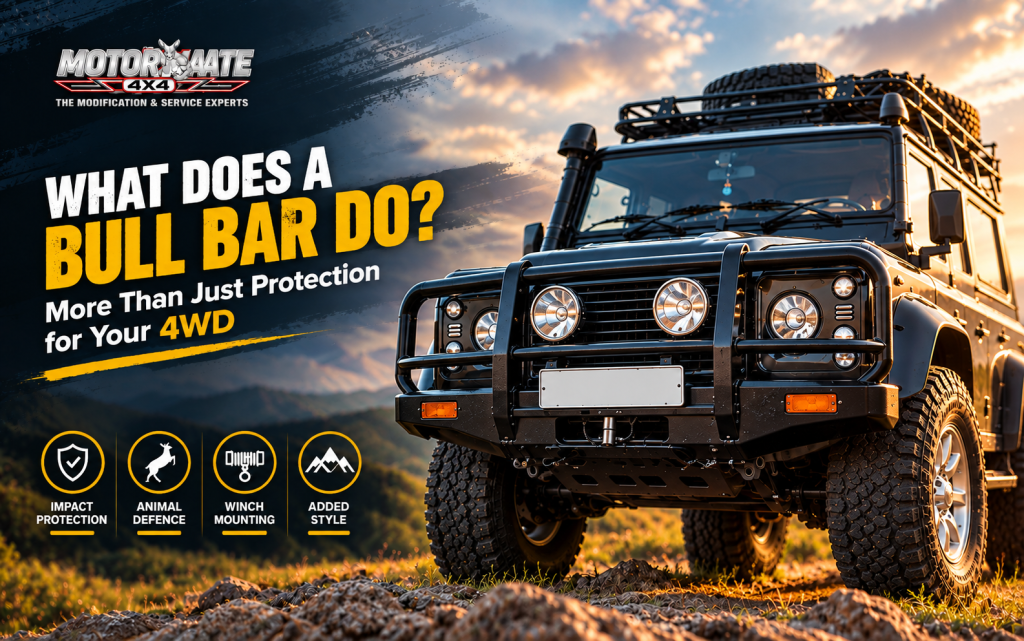
Table of Contents
If you drive a ute or 4WD in Western Australia, chances are you’ve thought about fitting a bull bar. But what does it actually do beyond looking tough on the front of your rig?
In this guide, we will discuss what a bull bar protects, what it doesn’t, and what you need to know before you buy one for WA roads.
What Is a Bull Bar?
A bull bar is a bar made from steel or aluminium, fitted to the front of a 4WD or ute in place of the standard bumper. It wraps around the front end of the vehicle, covering the grille and headlights, and gives the front of your car a much stronger structure than the factory bumper alone.
It’s often confused with a nudge bar, but the two aren’t the same thing. A nudge bar is smaller, sits lower, and only covers the central part of the bumper. A bull bar covers the full front end, including the headlights, which is why it offers a lot more protection.
What Does a Bull Bar Actually Do?
1. Protects the Front End in a Collision
The main job of a bull bar is to take the hit so your vehicle doesn’t have to. In WA, that mostly means animal strikes. Kangaroos are the obvious one, but livestock on unfenced country roads, emus, and even stray cattle are a real risk once you’re outside the metro area. A bull bar also helps against branches, fallen debris and rocks kicked up on rough tracks.
Specifically, a well-built bull bar shields your grille, headlights, radiator, cooling system and the front of your engine bay. On a remote trip, a damaged radiator can mean you’re stuck with an overheating engine hours from help. A bull bar is there to stop that from happening, or at least reduce the damage enough to get you home.
2. Improves Your Approach Angle Off-Road
Your approach angle is how steep a slope you can drive up before the front of your vehicle hits the ground. A properly designed bull bar reshapes the front end and tucks in higher than a stock bumper, which means fewer scrapes on inclines, rutted tracks and creek crossings. This matters if you’re heading into places like Julimar or the tracks around Lancelin, where the terrain changes fast.
3. Gives You Somewhere to Mount Your Gear
Once you’re touring or working off-road, a bull bar becomes a mounting point for everything else you need. Most bars come with a winch cradle, rated recovery points, and brackets for driving lights and other 4×4 accessories like a UHF aerial.
Winch cradles aren’t all rated the same, so check this before you buy. Some bars are only rated to around 9,500lb, while heavier-duty bars can handle 12,000 to 15,000lb winches. If you’re fitting a bigger winch, it’s worth checking whether your suspension can handle the extra weight sitting over the front axle too.
4. Reinforces the Front End Properly, Not Just Bolted On
A good bull bar isn’t just a bar bolted to your bumper mounts. Reputable manufacturers design the whole mounting system together, so the forces from an impact spread through the bar and chassis the way they’re supposed to, rather than putting stress on one weak point. This is part of why a cheap, generic bar can cause more problems than it solves over time.
Why Do 4WDs in Australia Have Bull Bars?
This isn’t really an Australian styling trend. It’s a practical response to Australian roads. Once you leave the city, roads in WA are often long, unfenced and shared with wildlife and livestock.
Corrugated gravel roads and long stretches without phone reception mean a breakdown from an animal strike can turn into a serious problem fast.
That’s a different situation to city or suburban driving, which is part of why bull bars are so common on utes and 4WDs here but far less common on cars overseas.
Bull Bar Protection: What It Covers (and What It Doesn’t)
A bull bar protects your grille, headlights, radiator, engine bay and the front of your chassis from direct impact. It won’t guarantee zero damage in every crash, though. In a serious or high-speed collision, it reduces the damage, but it doesn’t make your vehicle indestructible.
There’s also a compliance side that matters more than most buyers realise. Two Australian Design Rules cover occupant safety:
- ADR 69: full frontal occupant protection, the one tied to airbag timing.
- ADR 73: offset frontal occupant protection, for crashes where only part of the front end is hit.
A poorly designed or badly fitted bull bar can interfere with how your airbags deploy. Modern airbag systems rely on specific crash behaviour at the front of the car, so a compliant bar is engineered and mounted to keep that behaviour intact.
Newer utes add another layer to this: sensors, cameras and radar for adaptive cruise, lane-keep assist and autonomous braking, often mounted near the front bumper. A bull bar built without this in mind can throw them off. There’s no single rule covering it the way there is for airbags, but it’s worth asking about directly, especially on vehicles like the current Ranger, Hilux, BYD Shark 6 or Kia Tasman.
Pedestrian safety is covered separately, under AS 4876.1-2002, the Australian Standard for vehicle frontal protection systems. It sets rules on the shape and mounting height of a bull bar so it doesn’t create a hard, high-impact point in a pedestrian collision. Rigid bull bars have raised genuine concerns here in the past, which is exactly why this standard exists.
Key Bull Bar Benefits for 4WD and Ute Owners
Pulling this together, the main reasons owners fit a bull bar are:
- Frontal protection against animal strikes, branches and debris
- A stronger mounting point for winches, recovery gear, lights and aerials
- A better approach angle for off-road driving
- Added structural strength at the front of the vehicle
For tradies and work utes, this has a practical side too. A bull bar with rated recovery points and solid mounting is genuinely useful on a worksite, not just out bush. It gives you a way to recover a bogged vehicle or mount work lights without drilling into the factory bumper.
One thing worth saying clearly: looks are a fair bonus, but they shouldn’t be the reason you buy a bull bar. Protection and fit for your specific vehicle should come first, styling second.
Bull Bars in Perth: What to Think About Before You Buy
Vehicle-specific vs universal fit. A bull bar designed for your exact make and model will install cleaner, sit correctly with your sensors and cameras, and hold its compliance. Universal bars are cheaper but often mean compromises on fit and safety features.
Steel vs aluminium. Steel bars are stronger and usually cheaper, but they’re heavier. Aluminium bars are lighter, which matters more than people expect, since the extra weight of a steel bar eats into your GVM (gross vehicle mass). That’s a real issue if you’re already running a canopy, tools, and a full tray as a tradie. If you mostly drive on-road with occasional off-road trips, aluminium is often the better trade-off.
Bar style. A single hoop bar is a good middle ground for weight and protection. A triple hoop gives more coverage over the bonnet, which suits serious off-road or remote touring. A bumper-replacement style bar is lower profile and lighter, aimed at drivers who want a better approach angle without the extra weight of a full hoop design.
Compliance checklist. Before you commit to a bar, ask directly whether it’s rated for your specific vehicle against ADR 69, ADR 73 and AS 4876.1, and whether it’s confirmed to work with your car’s sensors if it has driver-assist features. Don’t assume a bar is compatible just because it physically fits.
Fitting matters as much as the bar itself. Even a fully compliant bull bar can cause problems if it’s not fitted correctly. Professional fitting means your sensors, cameras and safety systems are set up properly, not just the bar bolted on straight.
If you want the bigger picture on where a bull bar fits alongside the rest of your setup, including tyres, suspension, lighting and storage, our guide to the best 4WD accessories for Australian conditions covers how to prioritise upgrades based on how you actually use your vehicle.
Motor Mate 4×4: Get Your Bull Bar Sorted the Right Way
Motor Mate 4×4 sees this a lot: a bull bar is one of the few upgrades that genuinely earns its place on a 4WD. It protects the front of your vehicle, gives you somewhere to mount your gear, and holds up to what WA roads throw at you. What actually matters is getting a bar that’s built for your specific vehicle and fitted properly, so it does its job without causing problems down the line.
If you’re weighing up your options, you can browse our range of bull bars for popular utes and 4WDs, get in touch with our team, or call us on 08 9375 9994 to talk through what suits your vehicle.
FAQ
What’s the difference between a bull bar and a nudge bar?
A bull bar is bigger and covers the full front end, including the headlights and grille. A nudge bar is smaller, sits lower, and only protects the central part of the bumper. Nudge bars suit light urban use; bull bars suit rural driving, animal strikes and off-road work.
Will a bull bar affect my airbags or driver-assist features?
Only if it’s poorly designed or badly fitted. A bar that meets ADR 69 and ADR 73 is built and mounted so your airbags keep working the way your manufacturer intended, and a good fitter will also check it doesn’t interfere with sensors for features like adaptive cruise or autonomous braking.
Can I fit any winch to any bull bar?
Not always. Winch cradles have different weight ratings, so check the rating on your specific bar against the winch you want to run. Heavier winches can also mean your suspension needs a closer look, since the extra weight sits over the front of the vehicle.
Does fitting a bull bar affect fuel economy or insurance?
It can. The added weight and wind resistance from a bull bar can slightly increase fuel use, and some insurers ask about vehicle modifications, so it’s worth a quick check with your provider before fitting one.